Critical Thinking

Critical thinking is the ability to use information, ideas and arguments from relevant perspectives to make sense of complex issues and solve problems. Degree graduates will locate, evaluate, interpret, and combine information to reach well-reasoned conclusions or solutions.

Student Learning Outcomes

Who are we assessing?

Students enrolled in ART 101 & 102, BUS 205, CST 100, ETR 113, HIM 111, MUS 121 & SOC 268

How is performance rated?

A rubric, based on the Association of American Colleges and Universities (AAC&U) Critical Thinking VALUE Rubric, was used to evaluate work products of students in the selected courses.

View Rubric

What score do we expect?

75% of students will receive a score of 2 (minimally meets expectations) or higher on identifying the problem or complex issue and its various components.

What did we find?

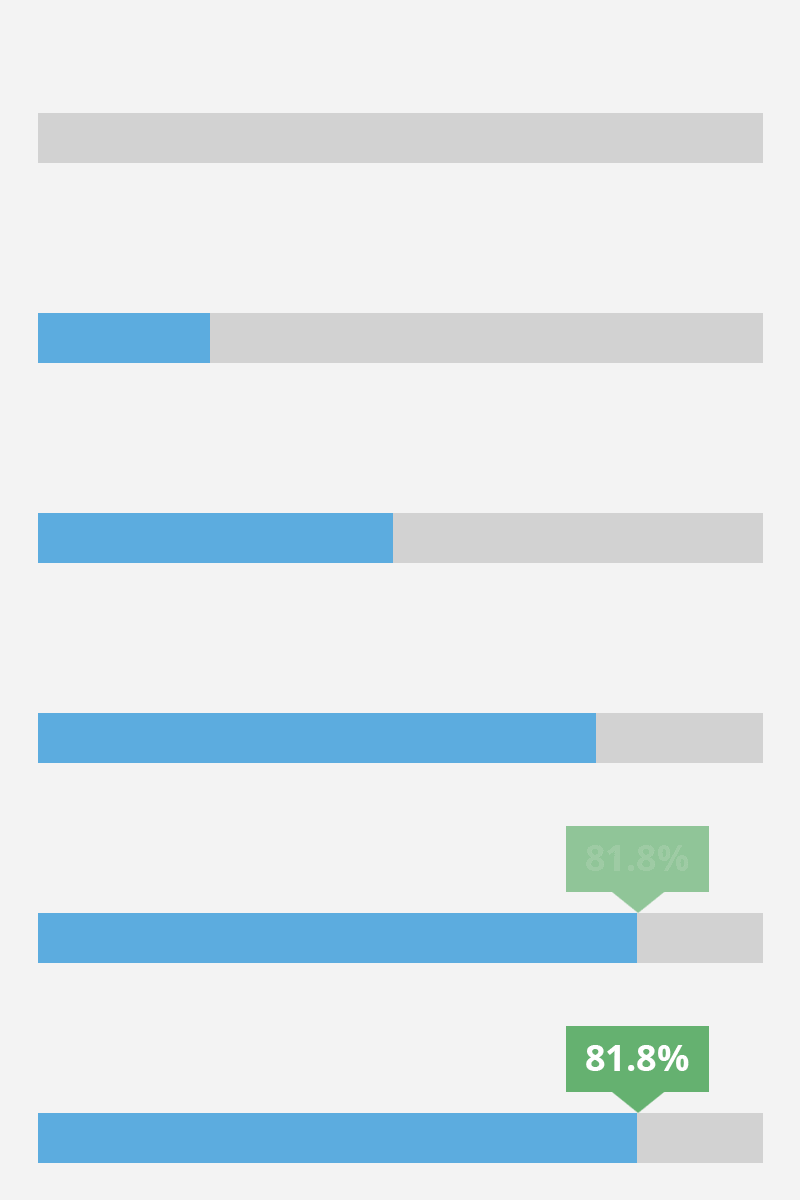
The target score was met with 81.8% of students scoring a 2 (minimally meets expectations) or higher.

The target score was met with 81.8% of students scoring a 2 (minimally meets expectations) or higher.

Where do we go from here?

At the beginning of each academic year, the General Education Committee reviews assessment findings to evaluate student achievement of General Education outcomes. The committee uses these results to identify trends, determine improvement priorities, and implement actions designed to strengthen student learning and program effectiveness.

Who are we assessing?

Students enrolled in ART 101 & 102, BUS 205, CST 100, ETR 113, HIM 111, MUS 121 & SOC 268

How is performance rated?

A rubric, based on the Association of American Colleges and Universities (AAC&U) Critical Thinking VALUE Rubric, was used to evaluate work products of students in the selected courses.

View Rubric

What score do we expect?

75% of students will receive a score of 2 (minimally meets expectations) or higher on identifying central issues and assumptions of a problem or issue.

What did we find?

The target score was met with 81.8% of students scoring a 2 (minimally meets expectations) or higher.

The target score was met with 81.8% of students scoring a 2 (minimally meets expectations) or higher.

Where do we go from here?

At the beginning of each academic year, the General Education Committee reviews assessment findings to evaluate student achievement of General Education outcomes. The committee uses these results to identify trends, determine improvement priorities, and implement actions designed to strengthen student learning and program effectiveness.

Who are we assessing?

Students enrolled in ART 101 & 102, BUS 205, CST 100, ETR 113, HIM 111, MUS 121 & SOC 268

How is performance rated?

A rubric, based on the Association of American Colleges and Universities (AAC&U) Critical Thinking VALUE Rubric, was used to evaluate work products of students in the selected courses.

View Rubric

What score do we expect?

75% of students will receive a score of 2 (minimally meets expectations) or higher on seeking and evaluating the information needed to fully understand the problem or complex issue.

What did we find?

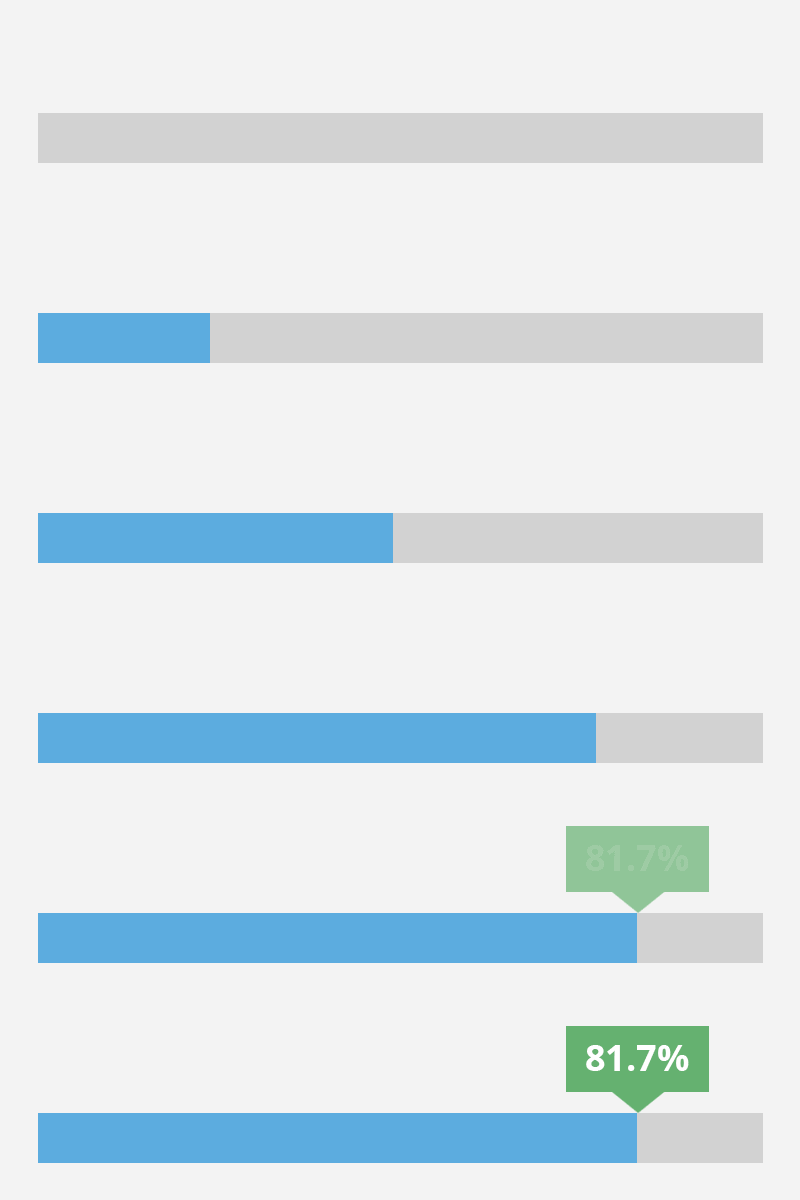
The target score was met with 81.7% of students scoring a 2 (minimally meets expectations) or higher.

The target score was met with 81.7% of students scoring a 2 (minimally meets expectations) or higher.

Where do we go from here?

At the beginning of each academic year, the General Education Committee reviews assessment findings to evaluate student achievement of General Education outcomes. The committee uses these results to identify trends, determine improvement priorities, and implement actions designed to strengthen student learning and program effectiveness.

Who are we assessing?

Students enrolled in ART 101 & 102, BUS 205, CST 100, ETR 113, HIM 111, MUS 121 & SOC 268

How is performance rated?

A rubric, based on the Association of American Colleges and Universities (AAC&U) Critical Thinking VALUE Rubric, was used to evaluate work products of students in the selected courses.

View Rubric

What score do we expect?

75% of students will receive a score of 2 (minimally meets expectations) or higher on identifying complexities of an issue, relevant perspectives and/or important relationships when taking a position on a complex issue or problem.

What did we find?

The target score was met with 81.8% of students scoring a 2 (minimally meets expectations) or higher.

The target score was met with 81.8% of students scoring a 2 (minimally meets expectations) or higher.

Where do we go from here?

At the beginning of each academic year, the General Education Committee reviews assessment findings to evaluate student achievement of General Education outcomes. The committee uses these results to identify trends, determine improvement priorities, and implement actions designed to strengthen student learning and program effectiveness.

Who are we assessing?

Students enrolled in ART 101 & 102, BUS 205, CST 100, ETR 113, HIM 111, MUS 121 & SOC 268

How is performance rated?

A rubric, based on the Association of American Colleges and Universities (AAC&U) Critical Thinking VALUE Rubric, was used to evaluate work products of students in the selected courses.

View Rubric

What score do we expect?

75% of students will receive a score of 2 (minimally meets expectations) or higher on analyzing various perspectives of a problem or complex issue in order to reach a well-reasoned conclusion or solution.

What did we find?

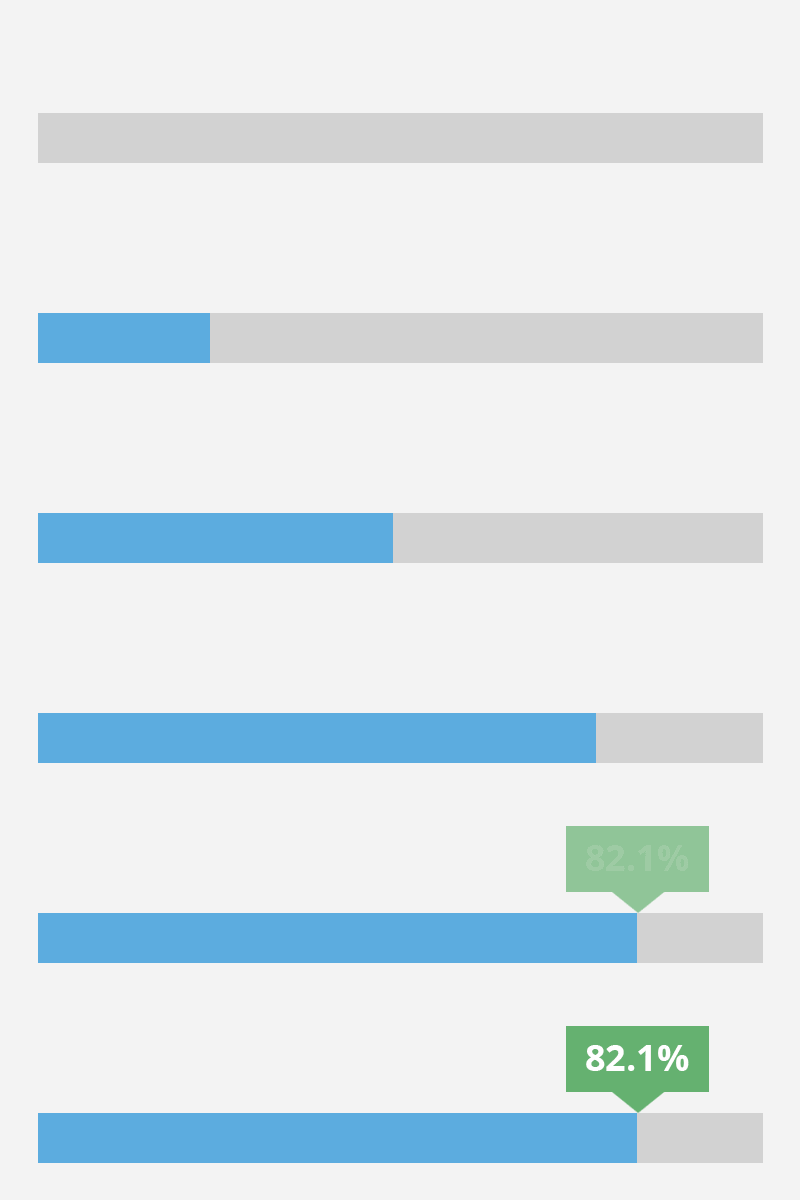
The target score was met with 82.1% of students scored a 2 (minimally meets expectations) or higher.

The target score was met with 82.1% of students scored a 2 (minimally meets expectations) or higher.

Where do we go from here?

At the beginning of each academic year, the General Education Committee reviews assessment findings to evaluate student achievement of General Education outcomes. The committee uses these results to identify trends, determine improvement priorities, and implement actions designed to strengthen student learning and program effectiveness.